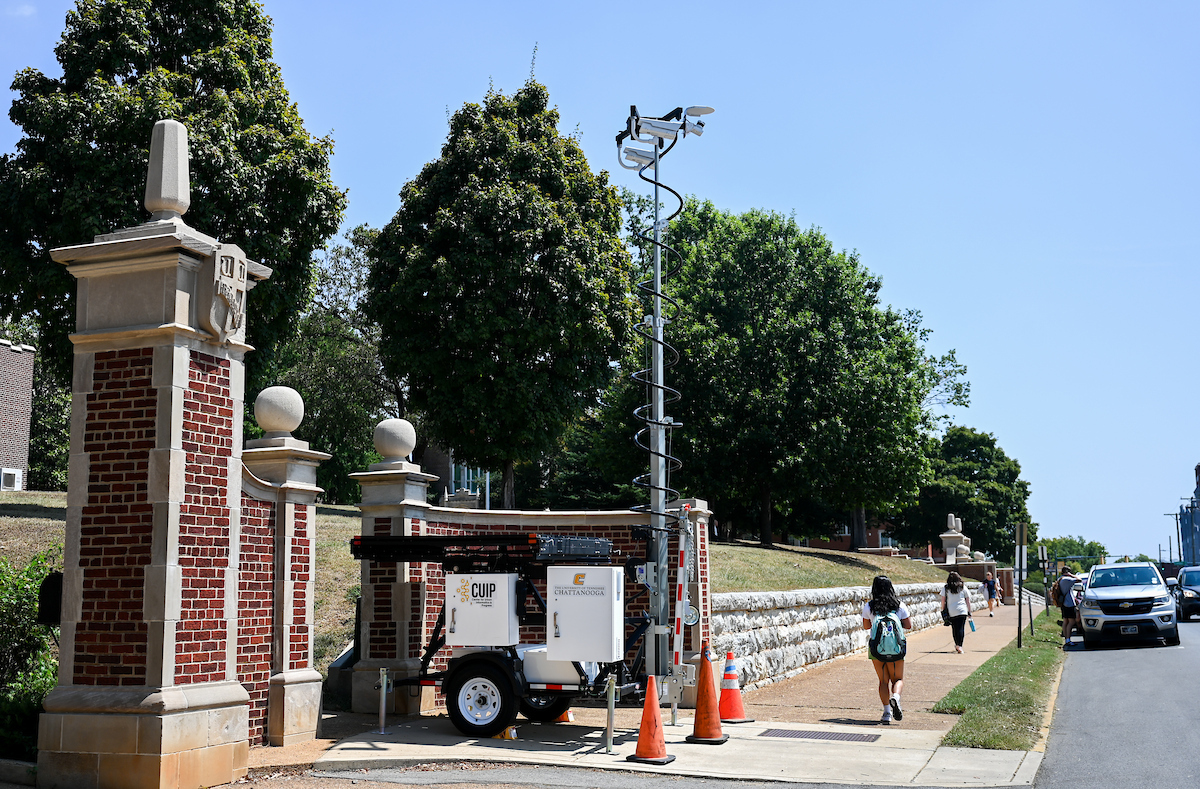
Testbed
Developed for real world research and data collection.
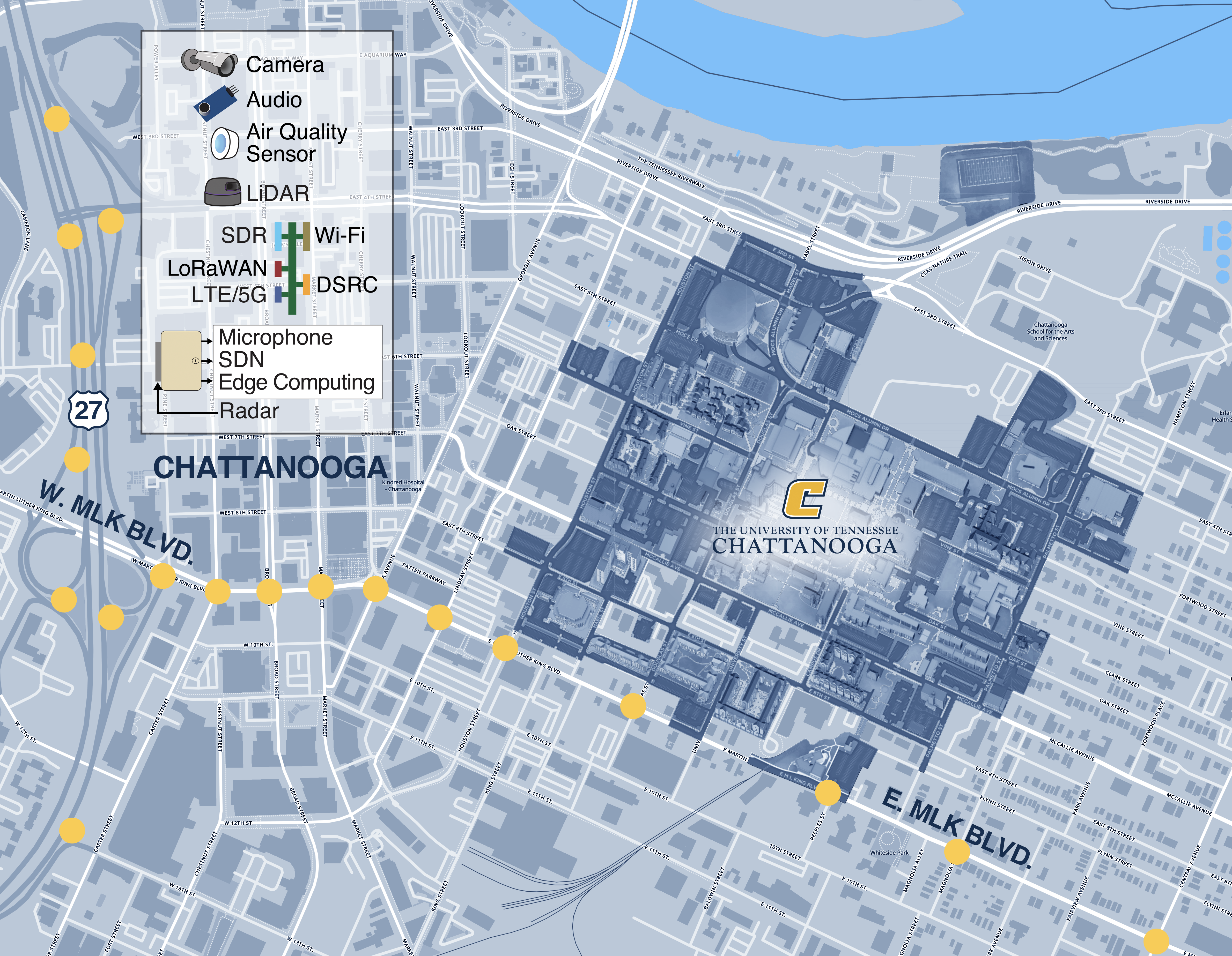
The CUIP Testbed spans across downtown Chattanooga Tennessee in dense urban walkable areas, main arteries into downtown, and highway locations. Starting in 2019, the CUIP Testbed was created with the goal of developing an urban Testbed-as-a-Service (Taas). This TaaS, allows researchers and collaborators to access real-world data to test and validate their results.
Key Features:
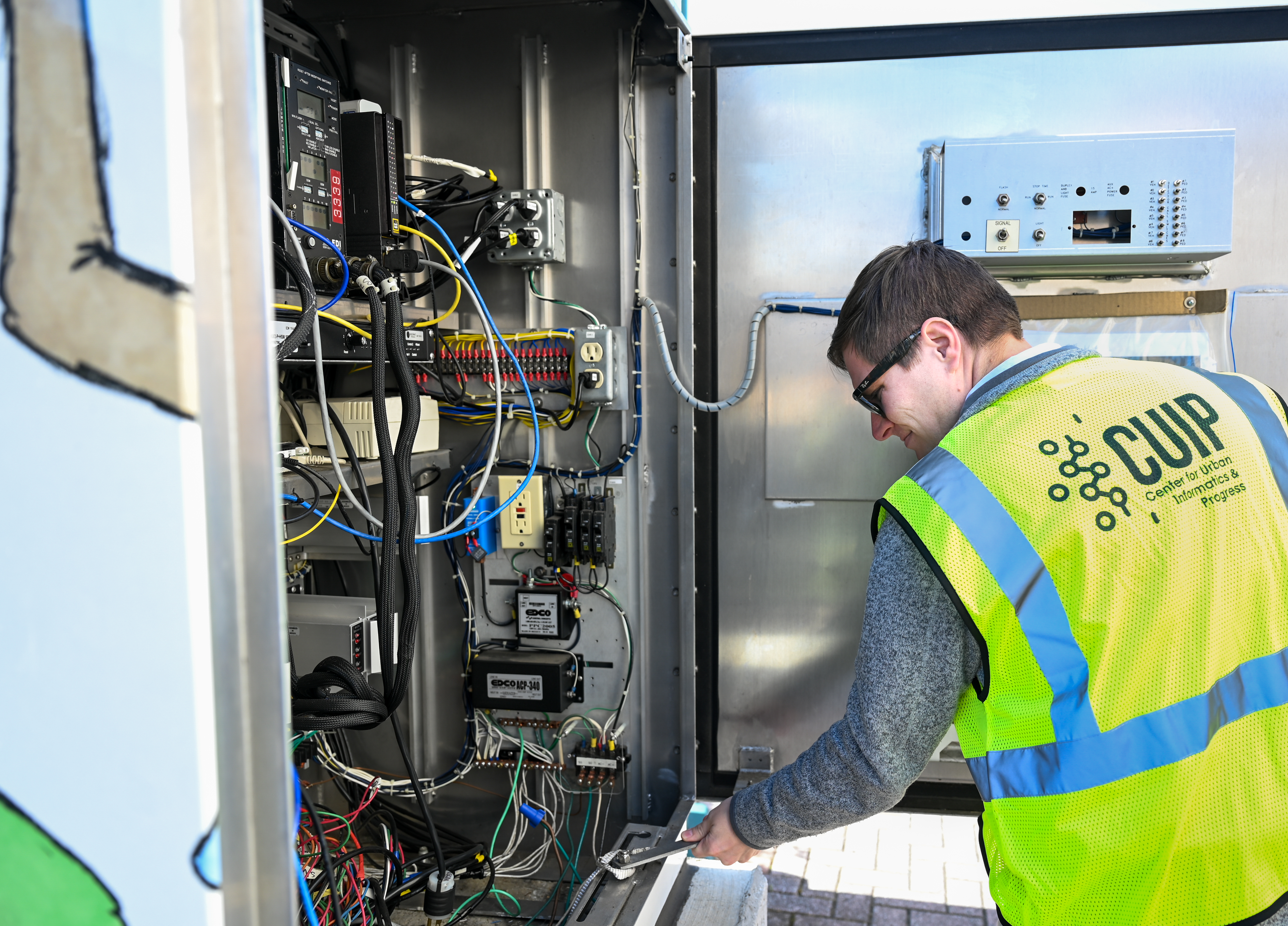
- Highly developed sensing capabilities: LiDAR, 4MP Cameras, Thermal Cameras, and Air Quality Sensors
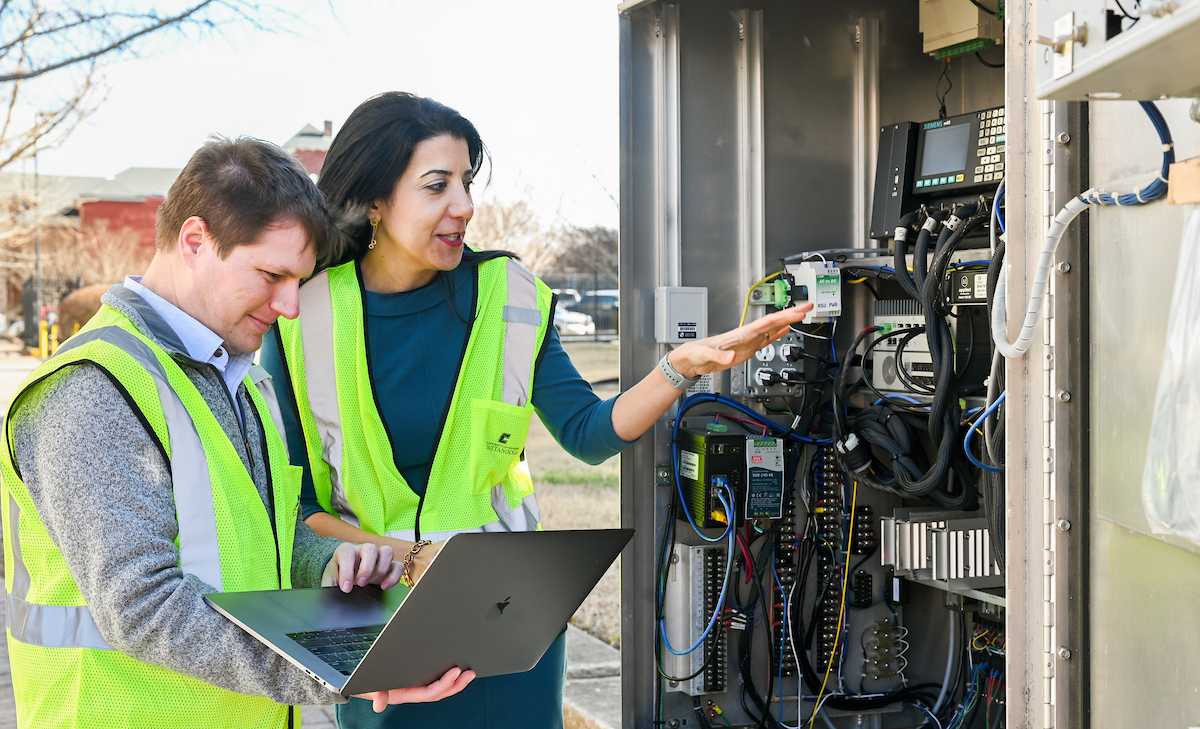
- Edge Computing: Nvidia AGX Orin at each location
- Vehicle-to-Everything (V2X) Communication: Roadside Units (RSUs) at each location that are Network V2X ready
- One mile corridor: The MLK Smart Corridor cuts through downtown Chattanooga’s dense urban walkable core by UTC campus and consists of 12 signalized intersections
- Highway locations: Four deployments along Highway 27 covering the main on and off ramps into downtown Chattanooga
- Testbed SDK and API: Allows for external collaborators to access the CUIP Testbed database and to build applications
Designed for Collaboration:
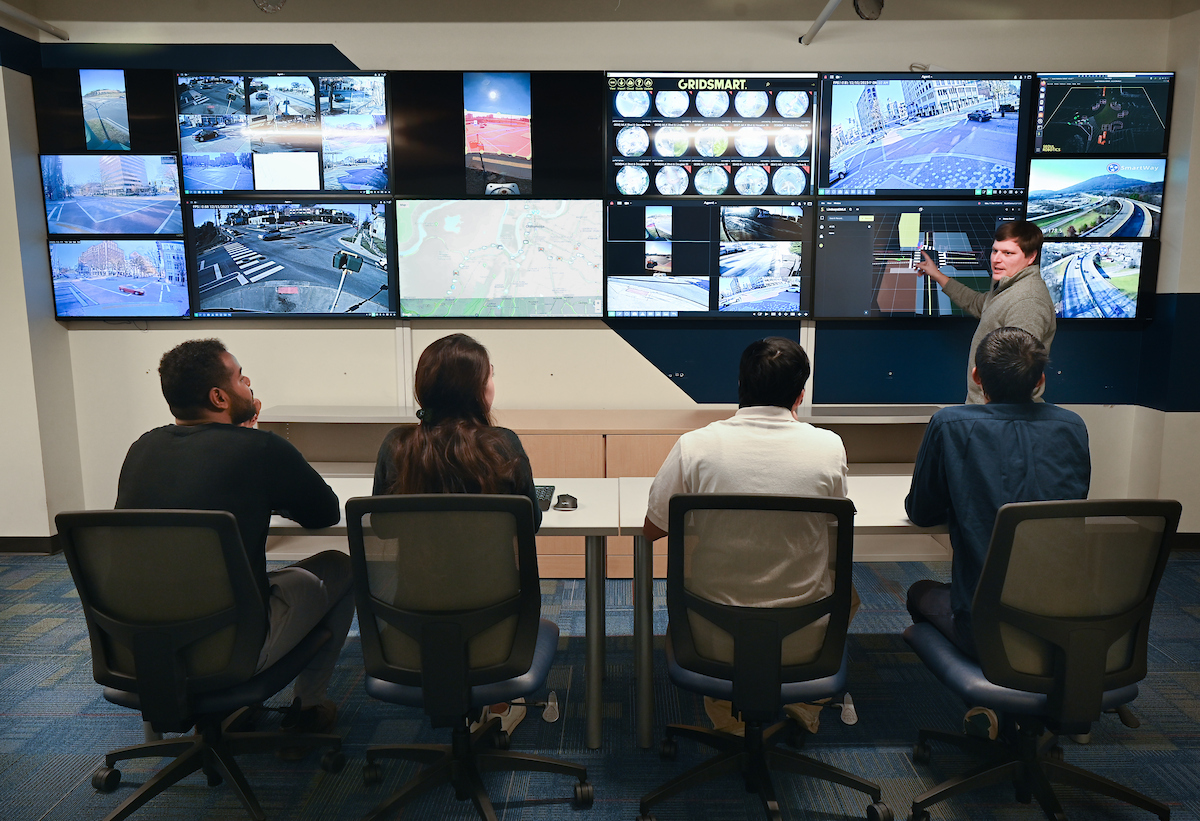
Our testbed—a 1 mile, real-world sandbox—is designed to facilitate early-stage research and development. Testing and data collection relies on real-world events, providing the most authentic results. Gathering data from the real world successfully integrates the incalculable nuance and complexity of urban living into research. Our testbed is specifically designed for collaboration with data made easily accessible to partners, a platform to handle more sensors, and more. Researchers are able to use our testbed remotely through an available SDK and/or REST API that enables real-time data ingestion or download datasets based on the user's needs. Currently, a web-based portal is under development that will enable non-programmatic access to data, experimentation submission, model deployment, and resources/experiment monitoring tools for researchers utilizing the testbed.